Today, freelancers, creators, startups, and growing businesses are automating repetitive tasks to save time and reduce operational friction. From sending emails to syncing apps and managing workflows, automation platforms have become indispensable.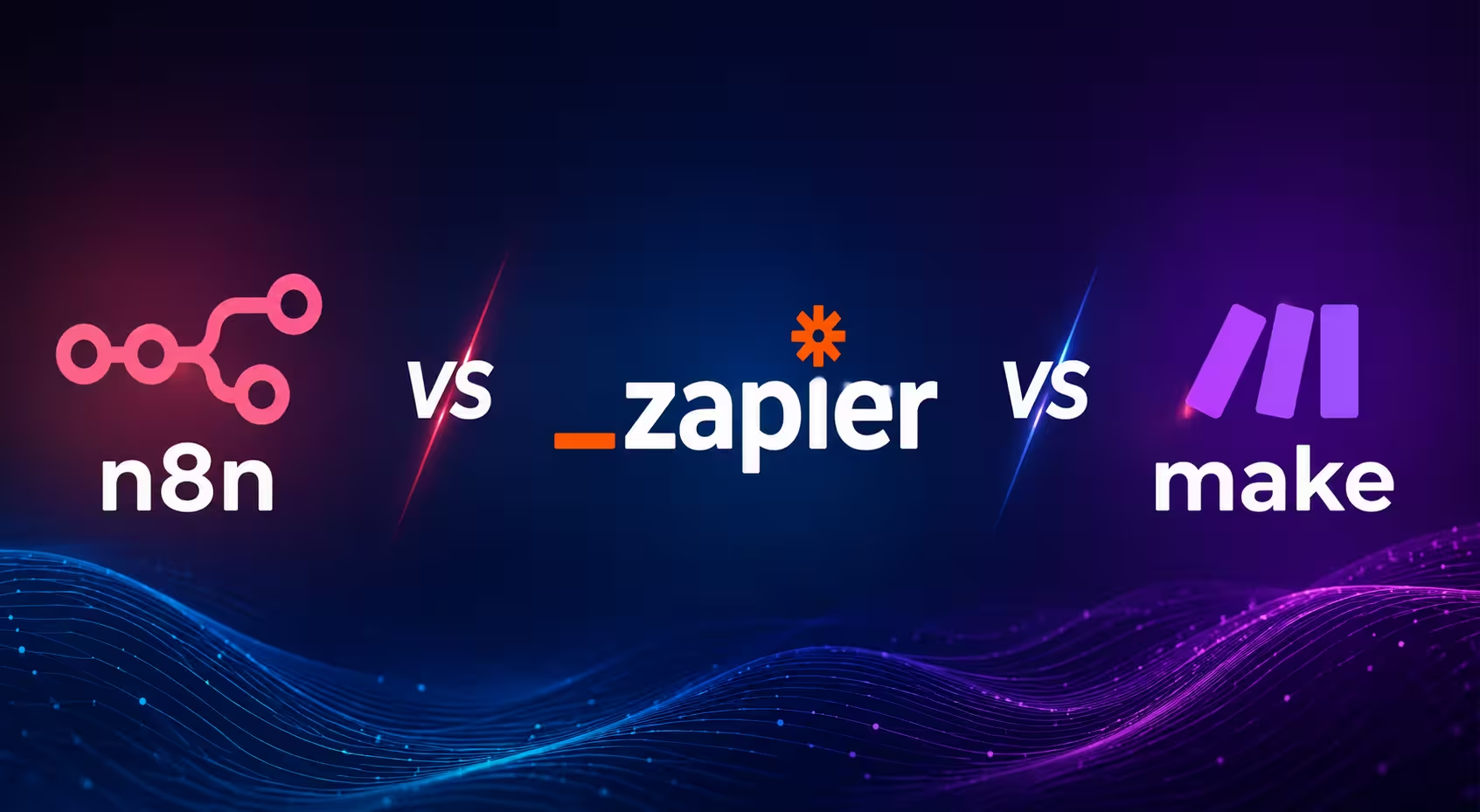
Among the most talked-about tools in this space are:
- n8n
- Zapier
- Make
Each platform approaches automation differently, and choosing the right one depends heavily on your goals, technical comfort, and scalability requirements.
Let’s examine how they compare.
Zapier: Simplicity Above Everything
Zapier is often the first platform people encounter when exploring automation.
Its biggest advantage is accessibility.
Even non-technical users can create workflows within minutes using its polished interface and enormous app ecosystem.
Strengths:
- beginner-friendly
- thousands of integrations
- fast setup
- excellent UI
Ideal For:
- marketers
- small businesses
- solo creators
- quick automations
However, Zapier can become expensive rather quickly as workflows grow more sophisticated.
Make: Visual and Flexible
Make, formerly known as Integromat, takes a more visual approach.
Instead of simple linear automations, Make allows users to build intricate workflows using drag-and-drop logic.
Its interface resembles a workflow diagram rather than a checklist.
Best Features:
- advanced logic handling
- visual automation builder
- detailed workflow control
- affordable scaling
This makes it appealing for users who want deeper customization without writing code.
n8n: The Developer’s Playground
n8n has gained enormous traction among developers and AI builders.
Unlike Zapier and Make, n8n offers:
- self-hosting
- open-source flexibility
- custom scripting
- advanced API integrations
This level of control makes it particularly powerful for AI workflows and backend automation.
Why Developers Love It:
- lower long-term costs
- unlimited customization
- strong AI integration capabilities
In recent years, n8n has become increasingly popular for building AI agents and autonomous workflows.
Pricing Comparison
Zapier
Excellent usability, but premium plans can become costly for high-volume workflows.
Make
Generally more affordable while offering substantial flexibility.
n8n
Extremely cost-efficient if self-hosted, especially for technical teams.
Which One Should You Choose?
Choose Zapier if:
You want simplicity and fast results with minimal technical setup.
Choose Make if:
You prefer visual workflow design with advanced logic capabilities.
Choose n8n if:
You need developer-level control, AI integrations, and scalable automation systems.
Final Verdict
There is no universal winner.
Each platform serves a different audience.
Zapier prioritizes convenience.
Make emphasizes workflow flexibility.
n8n delivers power and extensibility.
The best automation platform is ultimately the one that aligns with your technical expertise and business needs.
As automation continues reshaping modern work, mastering one of these tools can dramatically improve productivity and efficiency.
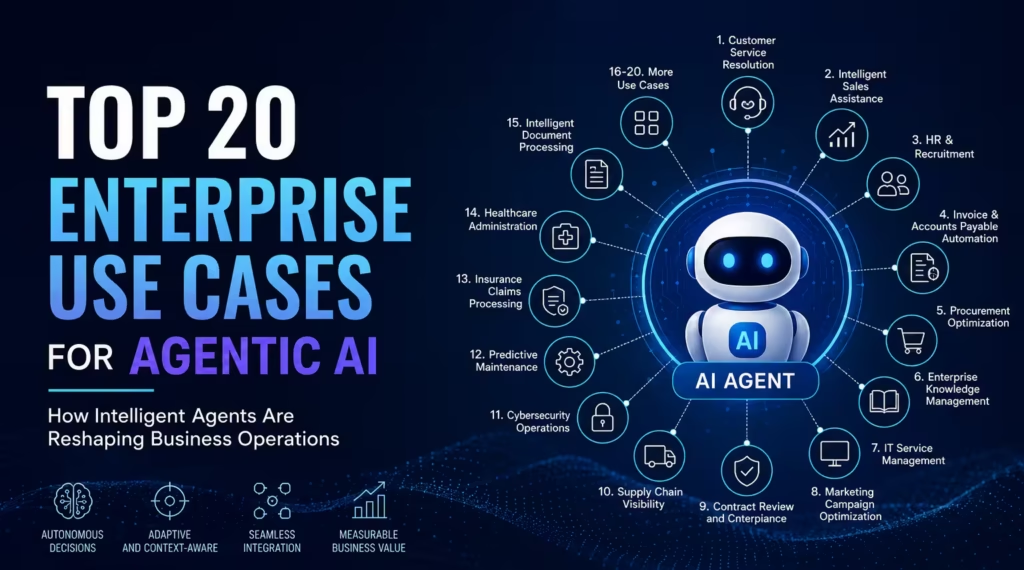
Top 20 Enterprise Use Cases for Agentic AI
While the first wave of AI focused on generating content, answering questions, and assisting employees, the next wave is about taking action. This evolution is known as Agentic AI—intelligent systems capable of planning, reasoning, making decisions, and executing complex business workflows with minimal human intervention. Unlike traditional automation, which follows predefined rules, Agentic AI adapts […]
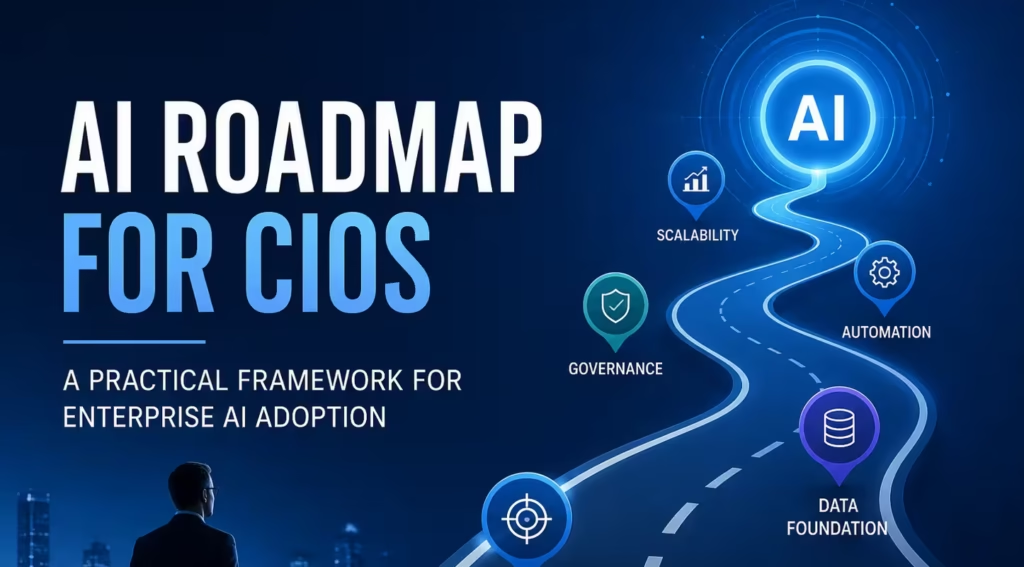
AI Roadmap for CIOs | Enterprise AI Strategy & Adoption Guide
Organizations across industries are investing in AI to improve productivity, automate processes, enhance customer experiences, and make data-driven decisions. However, while enthusiasm for AI is high, many initiatives fail to move beyond pilot projects because organizations lack a structured implementation strategy. For Chief Information Officers (CIOs), the challenge is no longer deciding whether to adopt […]
AI Workforce Management for Enterprise Leaders
For decades, workforce management has focused on people—hiring, training, scheduling, performance management, and employee engagement. As Artificial Intelligence becomes embedded into everyday business operations, a new challenge is emerging: organizations must now manage not only human employees but also intelligent AI agents, automation workflows, and digital assistants. This shift marks the beginning of AI Workforce […]