
You can now build AI systems that research information, send emails, summarize documents, automate workflows, write code, and even collaborate with other AI agents — all with minimal human involvement. What once felt like science fiction is quietly becoming part of everyday business operations.
The best part? You don’t need to be an AI scientist to build one.
With Python and a few modern tools, anyone can start creating powerful AI agents capable of automating real-world workflows.

What Is an AI Agent?

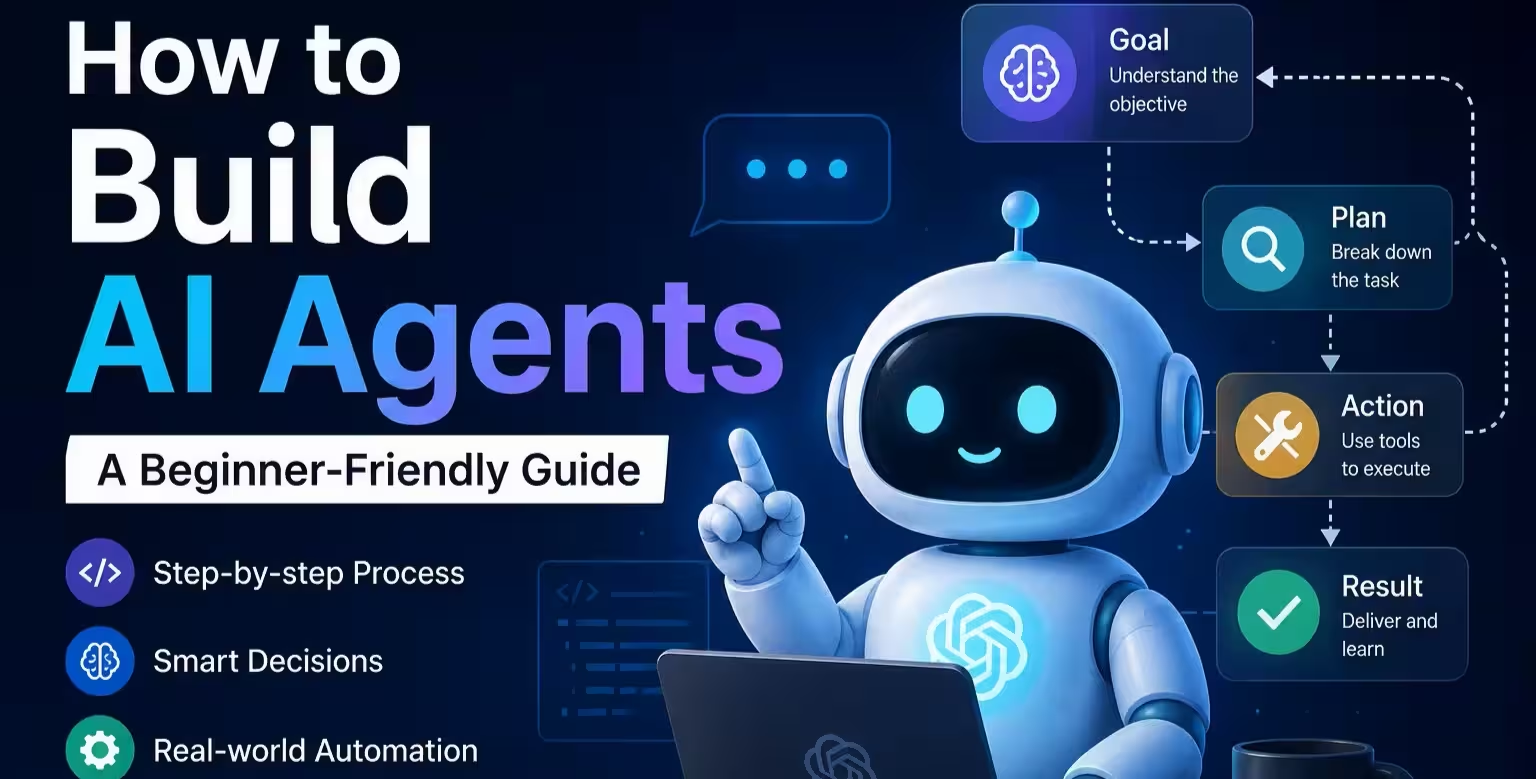
An AI agent is a software system that can:

  • understand instructions
  • make decisions
  • use tools
  • perform actions automatically

Unlike traditional chatbots, AI agents don’t just respond to prompts. They can execute tasks independently.

For example, you could ask an AI agent to:

“Research trending AI topics and create a blog outline.”

The agent can search the web, gather insights, summarize findings, and generate content — all autonomously.

This approach is known as Agentic AI, and it’s rapidly becoming one of the most influential trends in technology.


Core Components of an AI Agent

Most AI agents are built using four essential components:

1. Large Language Model (LLM)

The “brain” of the agent. Models like GPT handle reasoning, planning, and text generation.

2. Memory

Memory helps the agent remember context and previous interactions, making workflows more coherent and intelligent.

3. Tools

Tools allow the agent to interact with external systems like:

  • Google Search
  • email APIs
  • databases
  • web browsers

4. Workflows

Workflows help the agent complete tasks step by step instead of generating a single response.


Best Tech Stack for AI Agents

If you’re starting out, this stack works beautifully:

  • Python → primary programming language
  • LangChain → AI agent framework
  • FastAPI → backend APIs
  • ChromaDB or Pinecone → memory storage
  • OpenAI APIs → LLM access
  • n8n or Zapier → workflow automation

How to Build Your First AI Agent

Step 1: Define the Goal

Start simple.

Examples:

  • AI research assistant
  • AI content writer
  • AI email automation tool

A focused agent performs better than an overly complex one.

Step 2: Connect an LLM

Use an LLM like GPT to power reasoning and responses.

Step 3: Add Tools

Give your agent useful abilities like:

  • searching the web
  • sending emails
  • reading PDFs
  • accessing databases

Step 4: Add Memory

Memory allows your agent to remember users, tasks, and previous conversations.

Step 5: Build the Workflow

Create a sequence of actions.

Example:

  1. Research topic
  2. Summarize findings
  3. Write content
  4. Export final output

Conclusion

AI agents are no longer futuristic experiments. They’re becoming the foundation of modern software and automation.

Whether you’re a developer, entrepreneur, or tech enthusiast, learning how to build AI agents is one of the most valuable skills you can develop in 2026.

Start small, experiment consistently, and focus on solving real problems.

Because the future of software isn’t just apps anymore.

Related Blogs

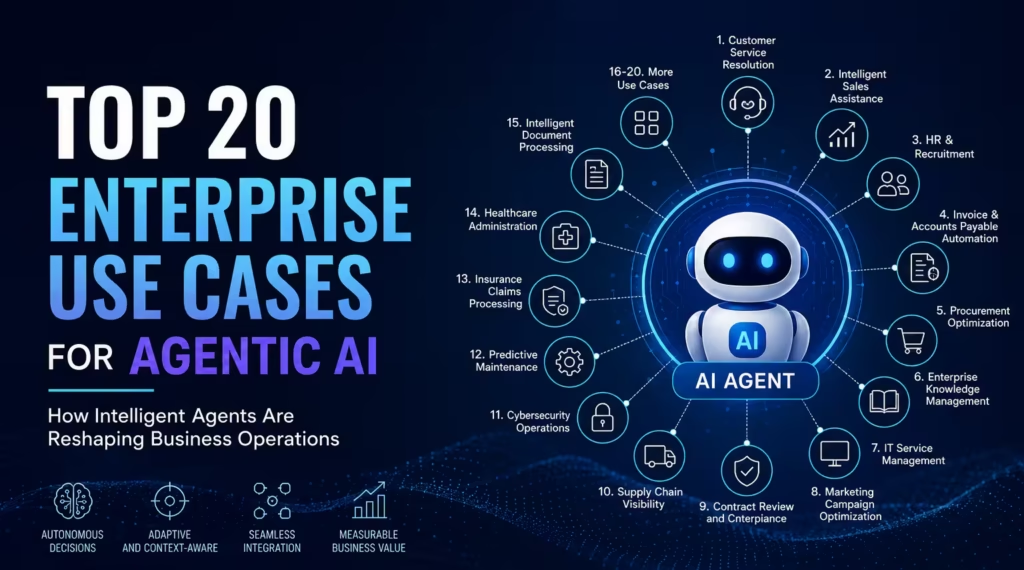
Top 20 Enterprise Use Cases for Agentic AI

Top 20 Enterprise Use Cases for Agentic AI

While the first wave of AI focused on generating content, answering questions, and assisting employees, the next wave is about taking action. This evolution is known as Agentic AI—intelligent systems capable of planning, reasoning, making decisions, and executing complex business workflows with minimal human intervention. Unlike traditional automation, which follows predefined rules, Agentic AI adapts […]
AI Roadmap for CIOs | Enterprise AI Strategy & Adoption Guide

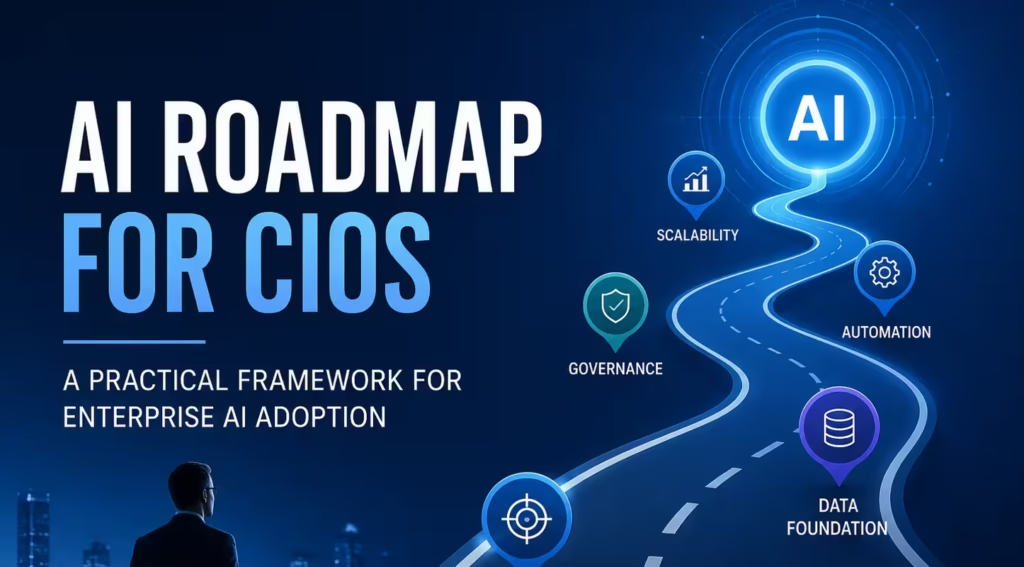
AI Roadmap for CIOs | Enterprise AI Strategy & Adoption Guide

Organizations across industries are investing in AI to improve productivity, automate processes, enhance customer experiences, and make data-driven decisions. However, while enthusiasm for AI is high, many initiatives fail to move beyond pilot projects because organizations lack a structured implementation strategy. For Chief Information Officers (CIOs), the challenge is no longer deciding whether to adopt […]
AI Workforce Management for Enterprise Leaders

AI Workforce Management for Enterprise Leaders

For decades, workforce management has focused on people—hiring, training, scheduling, performance management, and employee engagement. As Artificial Intelligence becomes embedded into everyday business operations, a new challenge is emerging: organizations must now manage not only human employees but also intelligent AI agents, automation workflows, and digital assistants. This shift marks the beginning of AI Workforce […]