
Artificial Intelligence has become a strategic investment for enterprises, but selecting the right AI vendor has become increasingly complex. Hundreds of providers promise intelligent automation, AI agents, predictive analytics, generative AI, and industry-specific solutions. While the capabilities may appear similar in product demonstrations, the long-term value often depends on factors that are not immediately visible.
For CIOs, choosing an AI vendor is not simply a technology decision—it is a business decision that affects security, governance, scalability, employee adoption, and return on investment for years to come.
This checklist provides a practical framework to evaluate AI vendors beyond marketing claims and identify partners capable of supporting enterprise-scale transformation.
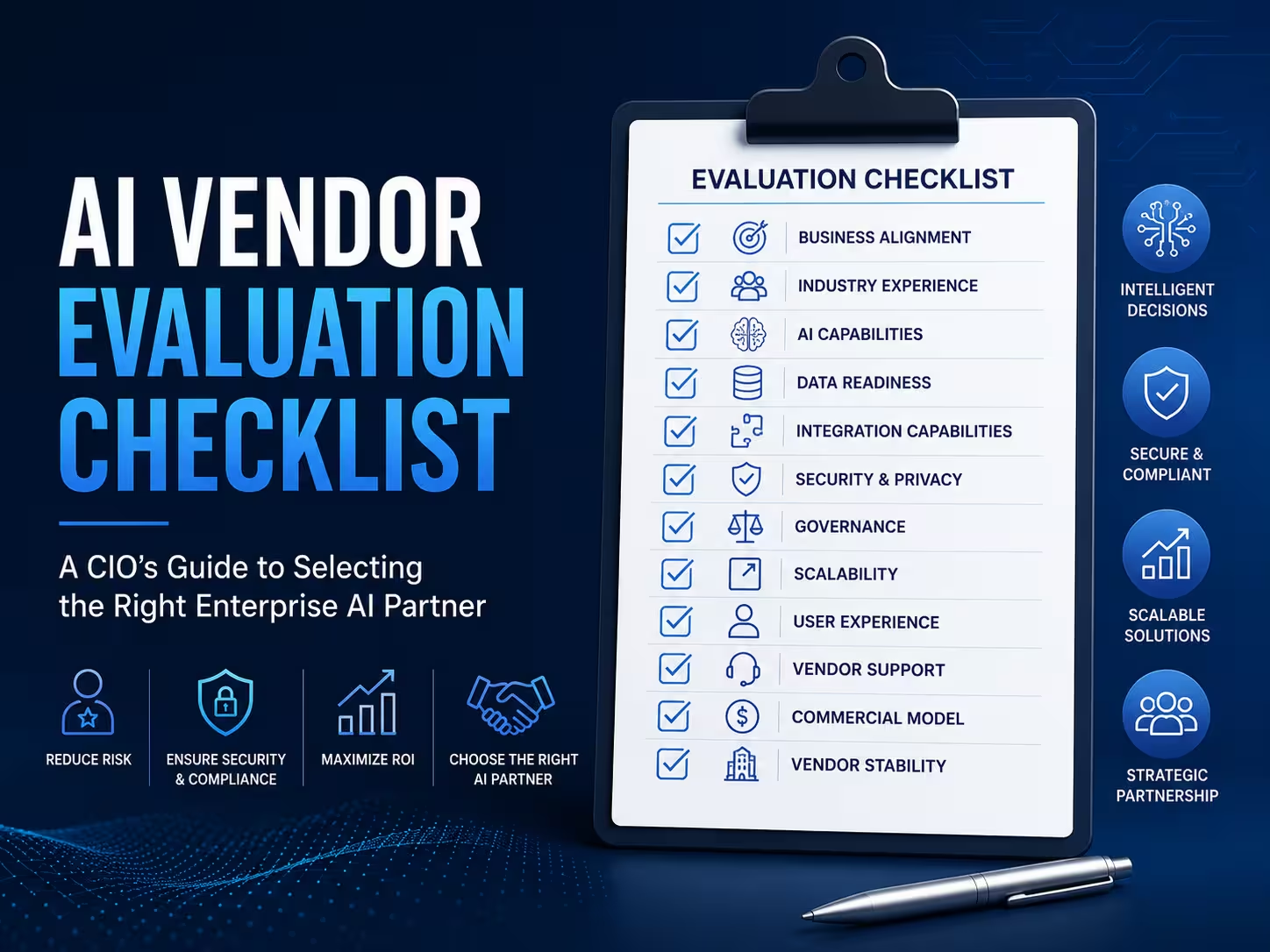
Why Vendor Selection Matters
Many AI initiatives fail because organizations purchase technology before defining business objectives. The result is disconnected tools, poor adoption, unexpected costs, and limited business value.
The best AI vendors do more than provide software. They become strategic partners who understand your business processes, integrate with existing systems, support governance, and help scale AI across the enterprise.
Enterprise AI Vendor Evaluation Checklist
Use the following checklist during vendor assessments, proof-of-concept workshops, and procurement discussions.
1. Business Alignment
Before discussing technology, confirm whether the solution supports your strategic objectives.
Ask:
- Does the solution solve a real business problem?
- Which business KPIs will improve?
- Can measurable ROI be demonstrated?
- Are relevant industry use cases available?
- Does the vendor understand our business processes?
A technically impressive solution with no measurable business outcome should not move forward.
2. Industry Experience
Every industry has unique regulatory, operational, and compliance requirements.
Evaluate whether the vendor has experience in:
- Manufacturing
- Healthcare
- Financial Services
- Retail
- Insurance
- Public Sector
- Professional Services
Request references from organizations with similar operational challenges.
3. AI Capabilities
Understand exactly what type of AI the vendor provides.
Questions to ask include:
- Does the platform support Generative AI?
- Are AI Agents supported?
- Does it offer predictive analytics?
- Can workflows be automated?
- Does it support document intelligence?
- Can multiple AI models be orchestrated?
- Is human approval available for sensitive decisions?
Avoid buying features you are unlikely to use.
4. Data Readiness
AI depends on high-quality data.
Evaluate:
- Supported data sources
- Data cleansing capabilities
- Real-time integration
- Data governance features
- Data lineage
- Master data support
- Structured and unstructured data processing
Poor data quality will reduce the effectiveness of any AI solution.
5. Integration Capabilities
Enterprise AI should complement your existing technology landscape rather than replace it.
Verify compatibility with:
- ERP systems
- CRM platforms
- Microsoft 365
- SharePoint
- Teams
- Email systems
- HR platforms
- Finance applications
- APIs
- Low-code and automation platforms
The easier the integration, the faster the time to value.
6. Security and Privacy
Security should never be an afterthought.
Evaluate whether the vendor provides:
- Encryption in transit and at rest
- Role-based access control
- Multi-factor authentication
- Identity integration
- Audit logs
- Secure API access
- Data residency options
- Customer data isolation
Ask where your data is stored, how it is protected, and whether it is used to train public AI models.
7. Governance
Responsible AI requires clear governance.
Review whether the platform supports:
- Human-in-the-loop approvals
- Version control
- Model monitoring
- Prompt management
- Policy enforcement
- Explainability
- Bias monitoring
- Audit reporting
Governance becomes increasingly important as AI expands across departments.
8. Scalability
A successful pilot should evolve into an enterprise platform.
Assess:
- Number of supported users
- Concurrent workloads
- Geographic deployment options
- Cloud scalability
- Performance under peak demand
- Multi-department support
Choose a platform that can grow with your organization.
9. User Experience
Technology adoption depends on usability.
Review:
- Ease of configuration
- Dashboard quality
- Mobile accessibility
- Self-service capabilities
- No-code workflow design
- Business user experience
Employees are more likely to adopt AI solutions that simplify their work rather than increase complexity.
10. Vendor Support
Implementation success depends heavily on vendor support.
Evaluate:
- Technical support availability
- Dedicated customer success team
- Implementation methodology
- Training programs
- Documentation quality
- Community resources
- Response times
- Service Level Agreements (SLAs)
A strong support model reduces implementation risks.
11. Commercial Model
Look beyond the initial license fee.
Review:
- Subscription costs
- Implementation charges
- API usage fees
- AI consumption pricing
- Support costs
- Upgrade policies
- Additional module pricing
- Long-term total cost of ownership
The least expensive solution is not always the most cost-effective over five years.
12. Vendor Stability
Selecting an AI vendor is a long-term commitment.
Consider:
- Financial health
- Years in business
- Enterprise customer base
- Product roadmap
- Innovation history
- Investment in research and development
- Partner ecosystem
Choose vendors that demonstrate a clear commitment to continuous innovation.
Questions Every CIO Should Ask Before Signing a Contract
Before making a final decision, ask every shortlisted vendor:
- How quickly can measurable business value be delivered?
- Which implementation risks should we expect?
- How is customer data protected?
- Can the solution integrate with our existing applications?
- How will AI models be monitored and governed?
- What happens if we decide to change vendors?
- What ongoing skills will our internal team require?
- Can we start with one department and scale later?
The quality of the answers often reveals more than the product demonstration itself.
Red Flags to Watch For
Be cautious if a vendor:
- Promises unrealistic ROI without evidence.
- Cannot explain how decisions are made.
- Lacks enterprise security certifications.
- Offers limited integration capabilities.
- Provides no governance framework.
- Relies heavily on custom development for basic functionality.
- Has no customer references in your industry.
- Avoids discussing long-term operating costs.
These warning signs may indicate implementation challenges later.
Final Thoughts
The right AI vendor is more than a software provider—they become a long-term partner in your digital transformation journey. Successful AI adoption depends on selecting a solution that aligns with business goals, integrates with existing systems, protects enterprise data, and scales as organizational needs evolve.
By evaluating vendors through the lenses of business value, governance, security, integration, scalability, and support, CIOs can make informed decisions that reduce risk and maximize return on investment.
A disciplined evaluation process not only improves procurement outcomes but also lays the foundation for sustainable, enterprise-wide AI adoption.
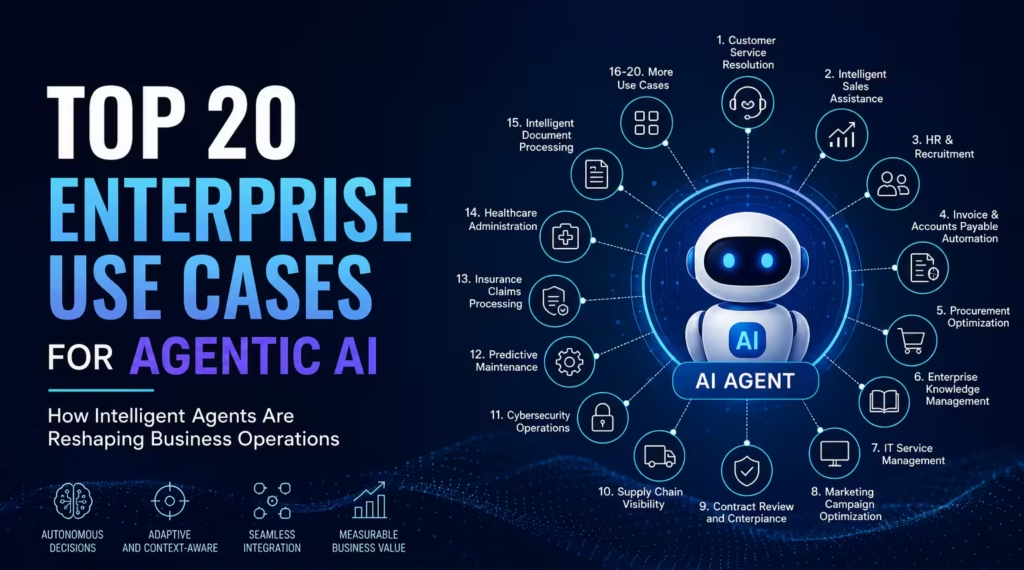
Top 20 Enterprise Use Cases for Agentic AI
While the first wave of AI focused on generating content, answering questions, and assisting employees, the next wave is about taking action. This evolution is known as Agentic AI—intelligent systems capable of planning, reasoning, making decisions, and executing complex business workflows with minimal human intervention. Unlike traditional automation, which follows predefined rules, Agentic AI adapts […]
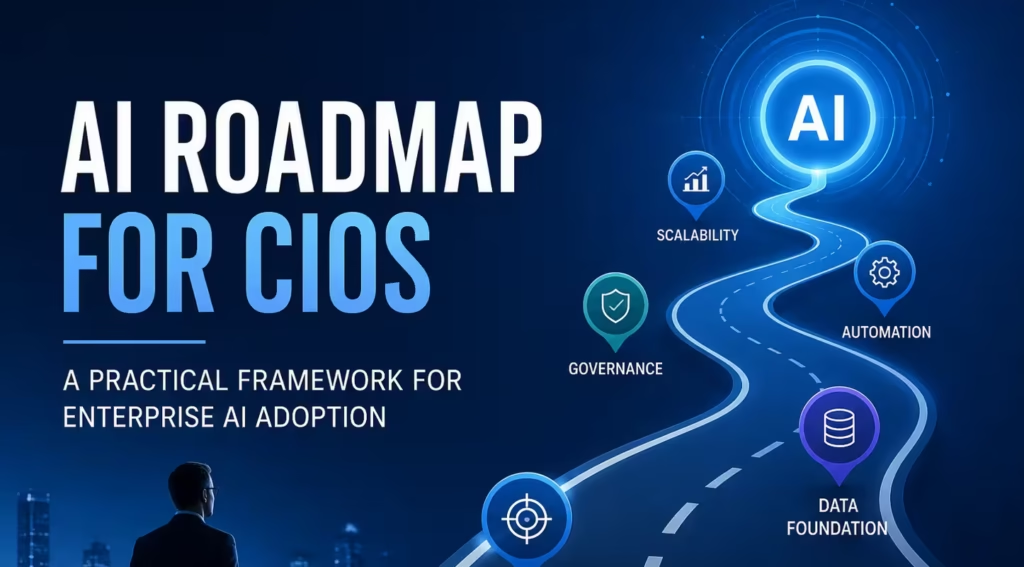
AI Roadmap for CIOs | Enterprise AI Strategy & Adoption Guide
Organizations across industries are investing in AI to improve productivity, automate processes, enhance customer experiences, and make data-driven decisions. However, while enthusiasm for AI is high, many initiatives fail to move beyond pilot projects because organizations lack a structured implementation strategy. For Chief Information Officers (CIOs), the challenge is no longer deciding whether to adopt […]
AI Workforce Management for Enterprise Leaders
For decades, workforce management has focused on people—hiring, training, scheduling, performance management, and employee engagement. As Artificial Intelligence becomes embedded into everyday business operations, a new challenge is emerging: organizations must now manage not only human employees but also intelligent AI agents, automation workflows, and digital assistants. This shift marks the beginning of AI Workforce […]