Many real estate businesses generate enough leads but still struggle with conversions.
Why?
Because inquiries get missed. Follow-ups are delayed. Teams work on spreadsheets. Property updates happen manually. And managers have no clear visibility into what’s actually happening inside the business.
Over time, operations become dependent on people instead of systems.

That’s where workflow automation changes everything.
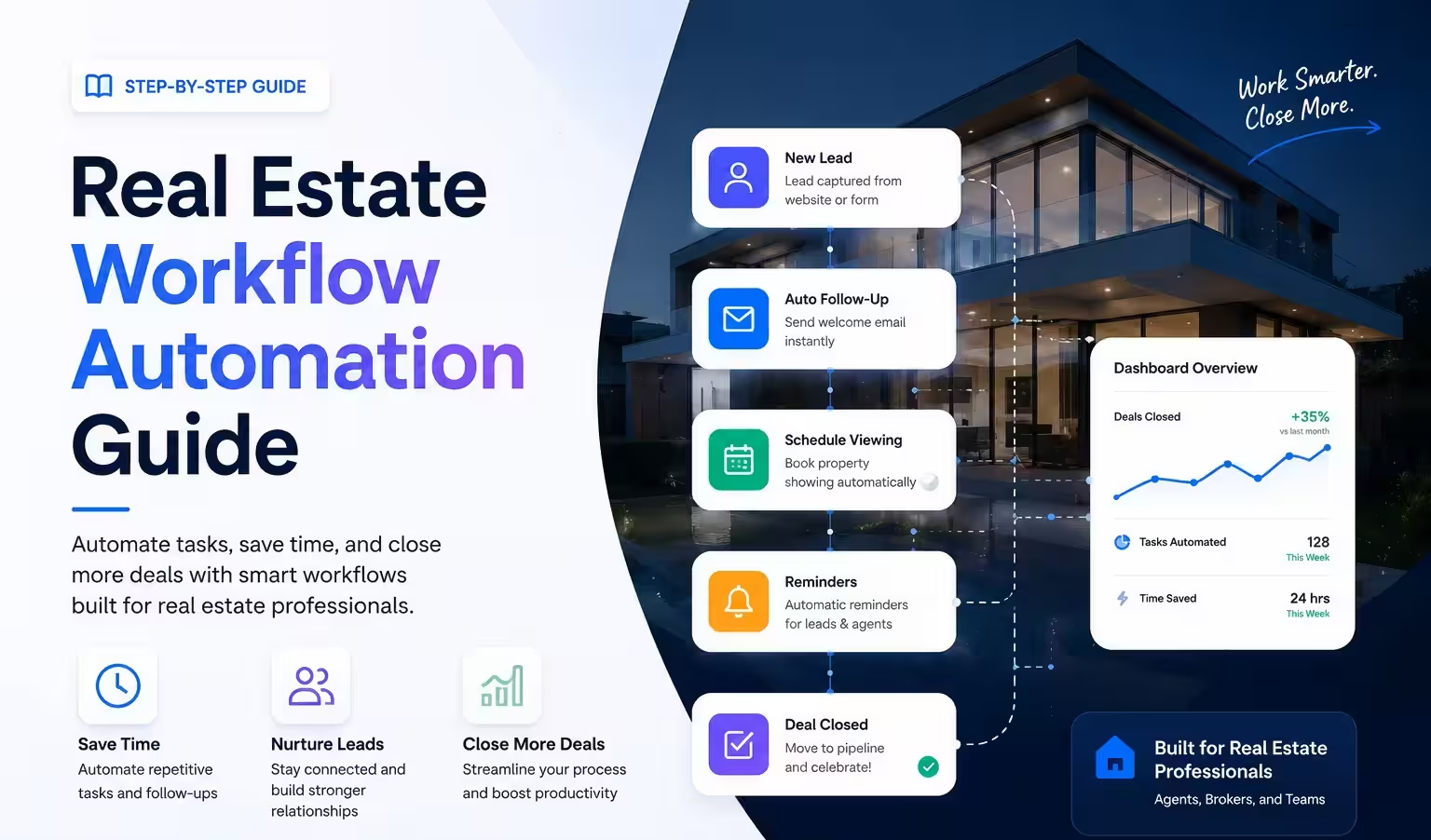
Automation helps real estate businesses create structured systems for lead management, follow-ups, sales tracking, and client communication — without increasing manual workload.
What Does Workflow Automation Mean in Real Estate?
Workflow automation simply means using software to handle repetitive operational tasks automatically.
For example:
- A lead from Facebook Ads automatically enters your CRM
- The inquiry gets assigned to a sales agent instantly
- Automated WhatsApp or email follow-ups are triggered
- Site visit reminders are sent automatically
- Managers receive daily sales reports without asking teams manually
Instead of relying on scattered communication and spreadsheets, the business runs through organized workflows.
Where Real Estate Businesses Should Start
One of the biggest mistakes companies make is trying to automate everything immediately.
The better approach is to start with the areas creating the biggest operational delays.
1. Lead Management
This is usually the first and most important workflow to automate.
A proper CRM setup can help your business:
- Capture leads from websites, ads, and property portals
- Assign leads automatically to agents
- Track follow-up activity
- Organize sales pipelines
- Measure conversion performance
Platforms like HubSpot and Zoho are commonly used because they integrate easily with marketing and communication tools.
2. Follow-Up Automation
Most real estate leads are lost because there’s no consistent follow-up process.
Automation helps maintain communication automatically through:
- WhatsApp reminders
- Email sequences
- Property recommendations
- Site visit confirmations
- Payment notifications
This improves response time while reducing dependency on manual coordination.
3. Internal Workflow Management
As teams grow, internal communication becomes difficult to manage.
Automation can simplify:
- Document approvals
- Inventory tracking
- Sales reporting
- Agent activity monitoring
- Booking status updates
This creates more operational transparency across teams.
How to Choose the Right Automation Agency
Not every software company understands real estate operations.
Choosing the wrong agency often leads to expensive tools that teams never fully use.
Before hiring an automation partner, focus on these factors:
Do They Understand Your Business Workflow?
A good agency should first understand:
- How your leads are generated
- How agents handle follow-ups
- Your booking process
- Customer communication flow
- Reporting structure
If an agency immediately starts selling software without studying your process, that’s usually a warning sign.
Are They Offering Custom Solutions?
Every real estate business works differently.
A builder managing multiple projects has different needs than a brokerage firm or property consultant.
Good automation agencies customize workflows instead of forcing businesses into rigid systems.
Can Their Solution Scale?
Your automation system should support future growth.
Ask whether the setup can handle:
- Multiple projects
- Multiple sales teams
- Marketing integrations
- WhatsApp automation
- CRM expansion
- Reporting dashboards
Scalable systems save time and redevelopment costs later.
Do They Provide Training & Support?
Even the best automation setup fails if the team doesn’t know how to use it.
A reliable agency should provide:
- Team onboarding
- CRM training
- Workflow support
- Ongoing optimization
Automation is not only about software — it’s about adoption.
Common Mistakes Real Estate Businesses Make
Many companies overcomplicate automation in the beginning.
You don’t need:
- Complex AI systems immediately
- Expensive enterprise software
- Too many disconnected tools
The smartest approach is starting small.
Most businesses should first automate:
- Lead capture
- CRM management
- Follow-up workflows
- Reporting systems
Once those systems work properly, additional automation becomes much easier.
Final Thoughts
Workflow automation helps real estate businesses become faster, more organized, and easier to scale.
The goal is not replacing teams — it’s removing repetitive operational work so your team can focus more on sales and customer relationships.
Businesses that build strong systems early usually grow more efficiently, respond to leads faster, and create better customer experiences over time.
Related Blogs
How Real Estate Businesses Can Start Workflow Automation
Many real estate businesses generate enough leads but still struggle with conversions. Why? Because inquiries get missed. Follow-ups are delayed. Teams work on spreadsheets. Property updates happen manually. And managers have no clear visibility into what’s actually happening inside the business. Over time, operations become dependent on people instead of systems. That’s where workflow automation […]
Why Headless CMS is Becoming the Future of Modern Websites
For years, businesses relied on traditional content management systems to build websites. They were simple, familiar, and easy to manage. But as digital experiences evolved, older systems started struggling to keep up with modern performance, scalability, and multi-platform content demands. That’s where Headless CMS technology stepped in. In 2026, headless CMS platforms are powering everything […]
The Rise of No-Code Development in 2026
No-code development is no longer just a startup trend — it has become a major force driving digital transformation across industries in 2026. Businesses, entrepreneurs, and even non-technical professionals are now building websites, apps, workflows, and automation systems without writing a single line of code. With the increasing demand for faster product launches and reduced […]