
The conversation around AI often focuses on what’s possible in the future.
But many businesses are already using AI agents today to handle routine work, improve customer experiences, and support their teams behind the scenes.
An AI agent is simply a digital worker that can perform tasks, make decisions based on rules and data, and take action without constant human involvement.
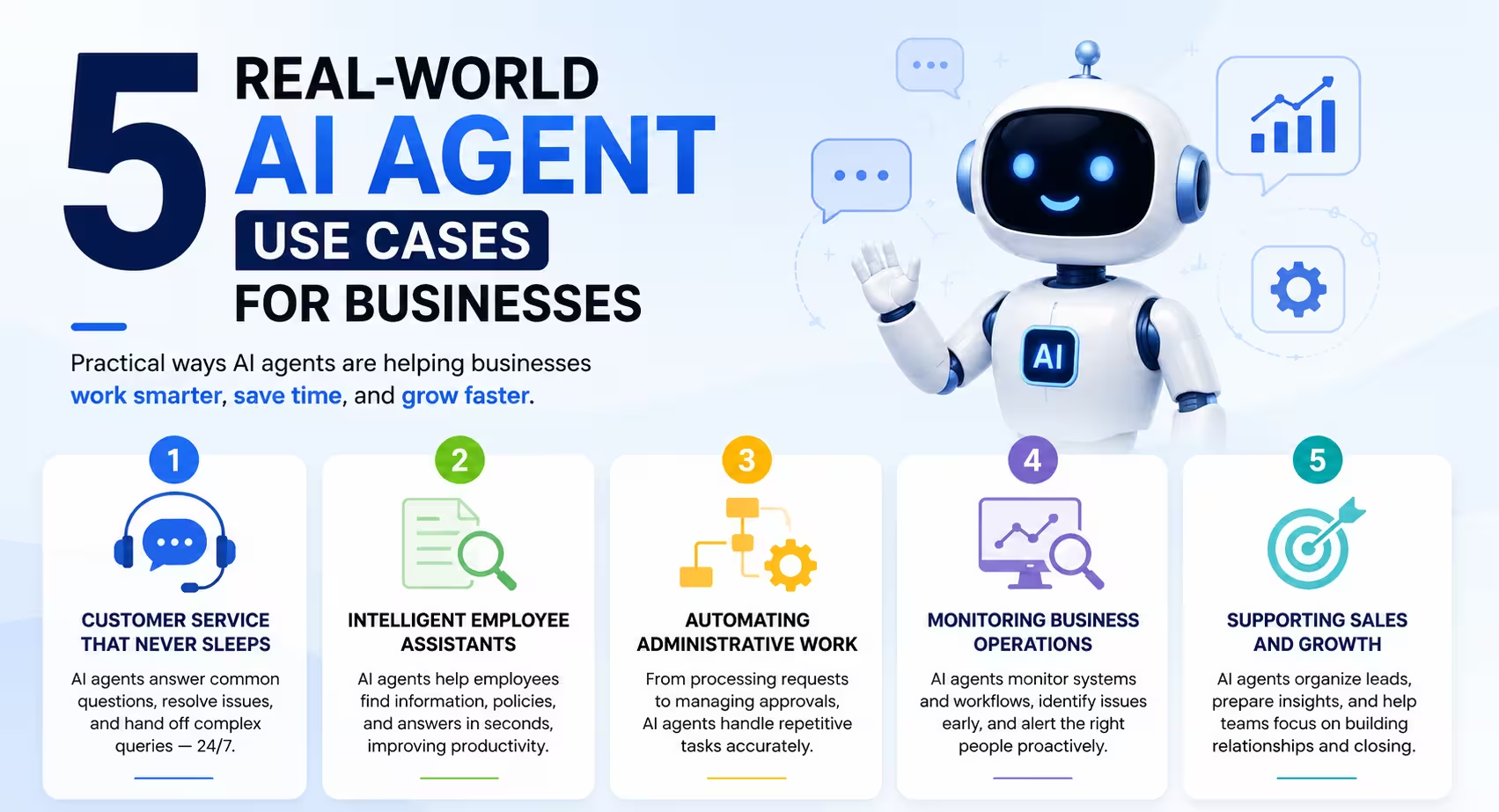
Unlike traditional software that waits for instructions, AI agents can monitor situations, respond to events, and complete workflows automatically.
Here are five practical ways businesses are putting AI agents to work.
1. Customer Service That Never Sleeps
One of the most common applications is customer support.
Businesses receive enquiries at all hours of the day. Customers expect quick answers, but hiring support teams to provide 24/7 coverage is often expensive.
An AI agent can:
- Answer common questions
- Provide product information
- Check order status
- Route complex enquiries to the right team
- Collect information before a human conversation
This ensures customers receive immediate assistance while allowing support teams to focus on more complex requests.
Example
A healthcare clinic uses an AI agent to answer appointment-related questions, provide clinic hours, and direct patients to the correct department.
The result is fewer phone calls and faster service.
2. Intelligent Employee Assistants
Employees spend a surprising amount of time searching for information.
Policies, procedures, training materials, and company knowledge are often stored across multiple systems.
An AI agent can act as an internal assistant that helps employees find answers quickly.
Instead of searching through folders and documents, employees simply ask a question.
Example
A legal firm uses an internal AI agent to help staff locate templates, procedures, and compliance information within seconds.
This reduces time spent searching and improves productivity across the organization.
3. Automating Administrative Work
Administrative tasks may not be complicated, but they consume valuable time.
Scheduling meetings, updating records, processing requests, and managing approvals can create significant workload as businesses grow.
AI agents can manage these processes automatically.
Example
A finance company uses an AI agent to process incoming requests, gather required information, notify the appropriate team, and track progress from start to finish.
Employees no longer spend hours manually coordinating these activities.
4. Monitoring Business Operations
Many businesses only discover problems after they have already impacted operations.
AI agents can continuously monitor systems, data, and workflows to identify issues early.
This creates a more proactive way of managing the business.
Example
A property management company uses AI agents to monitor maintenance requests and service response times.
When delays occur, the system automatically notifies managers and escalates urgent cases.
Instead of reacting to problems, the team can address them before they become larger issues.
5. Supporting Sales and Business Development
Sales teams often spend too much time on administrative work and not enough time building relationships.
AI agents can assist by organizing information, preparing summaries, updating systems, and ensuring opportunities receive timely attention.
Example
A consulting firm uses an AI agent to gather information from enquiries, create client summaries, schedule meetings, and prepare notes before consultations.
This allows consultants to focus on conversations rather than administration.
Why Businesses Are Adopting AI Agents
The goal is not to replace employees.
The goal is to remove repetitive work, improve consistency, and help teams focus on higher-value activities.
AI agents are particularly effective when they:
- Handle repetitive processes
- Work across multiple systems
- Support employees with information
- Improve response times
- Reduce manual effort
As businesses continue to look for ways to improve efficiency and scalability, AI agents are becoming a practical tool for creating smarter operations.
The organizations seeing the greatest success are not using AI agents to do everything.
They are using them strategically to support people, streamline workflows, and eliminate unnecessary friction throughout the business.
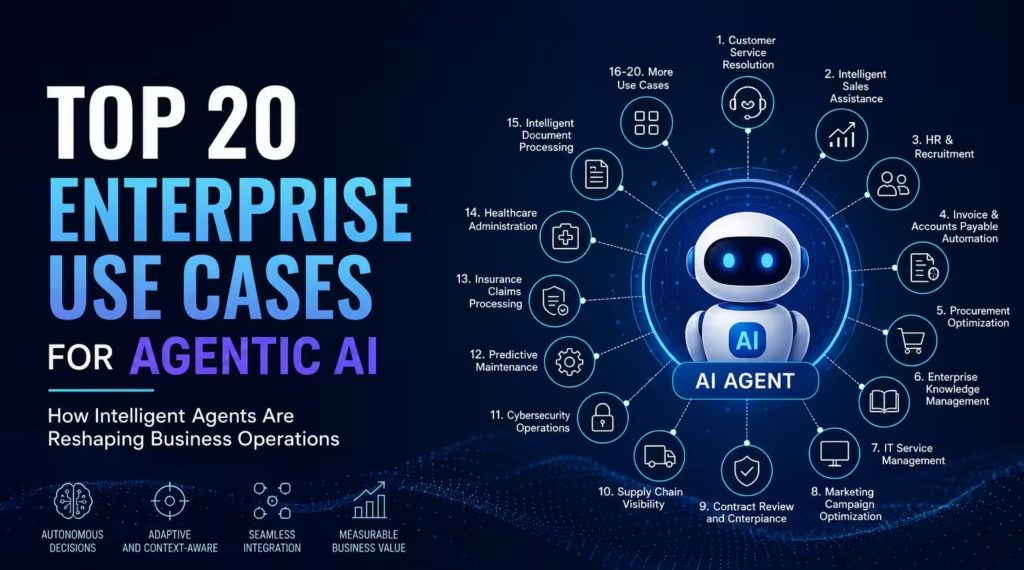
Top 20 Enterprise Use Cases for Agentic AI
While the first wave of AI focused on generating content, answering questions, and assisting employees, the next wave is about taking action. This evolution is known as Agentic AI—intelligent systems capable of planning, reasoning, making decisions, and executing complex business workflows with minimal human intervention. Unlike traditional automation, which follows predefined rules, Agentic AI adapts […]
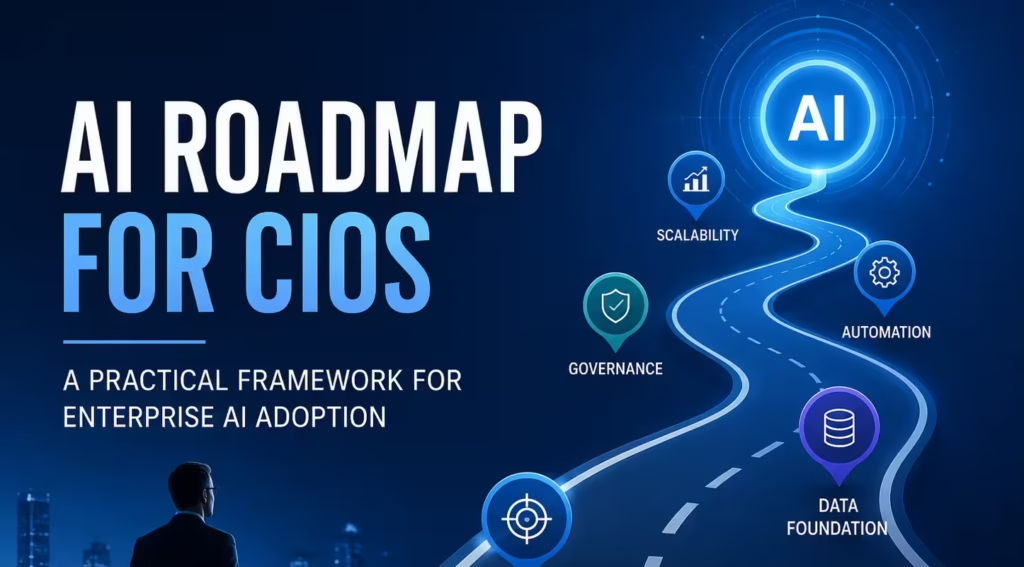
AI Roadmap for CIOs | Enterprise AI Strategy & Adoption Guide
Organizations across industries are investing in AI to improve productivity, automate processes, enhance customer experiences, and make data-driven decisions. However, while enthusiasm for AI is high, many initiatives fail to move beyond pilot projects because organizations lack a structured implementation strategy. For Chief Information Officers (CIOs), the challenge is no longer deciding whether to adopt […]
AI Workforce Management for Enterprise Leaders
For decades, workforce management has focused on people—hiring, training, scheduling, performance management, and employee engagement. As Artificial Intelligence becomes embedded into everyday business operations, a new challenge is emerging: organizations must now manage not only human employees but also intelligent AI agents, automation workflows, and digital assistants. This shift marks the beginning of AI Workforce […]