Artificial intelligence (AI) is transforming how businesses operate, from automating repetitive tasks to improving customer experiences and supporting decision-making. However, adopting AI without a clear strategy can lead to wasted resources, security risks, and disappointing results.
To achieve meaningful results, businesses must understand the challenges of AI adoption and how to overcome them.
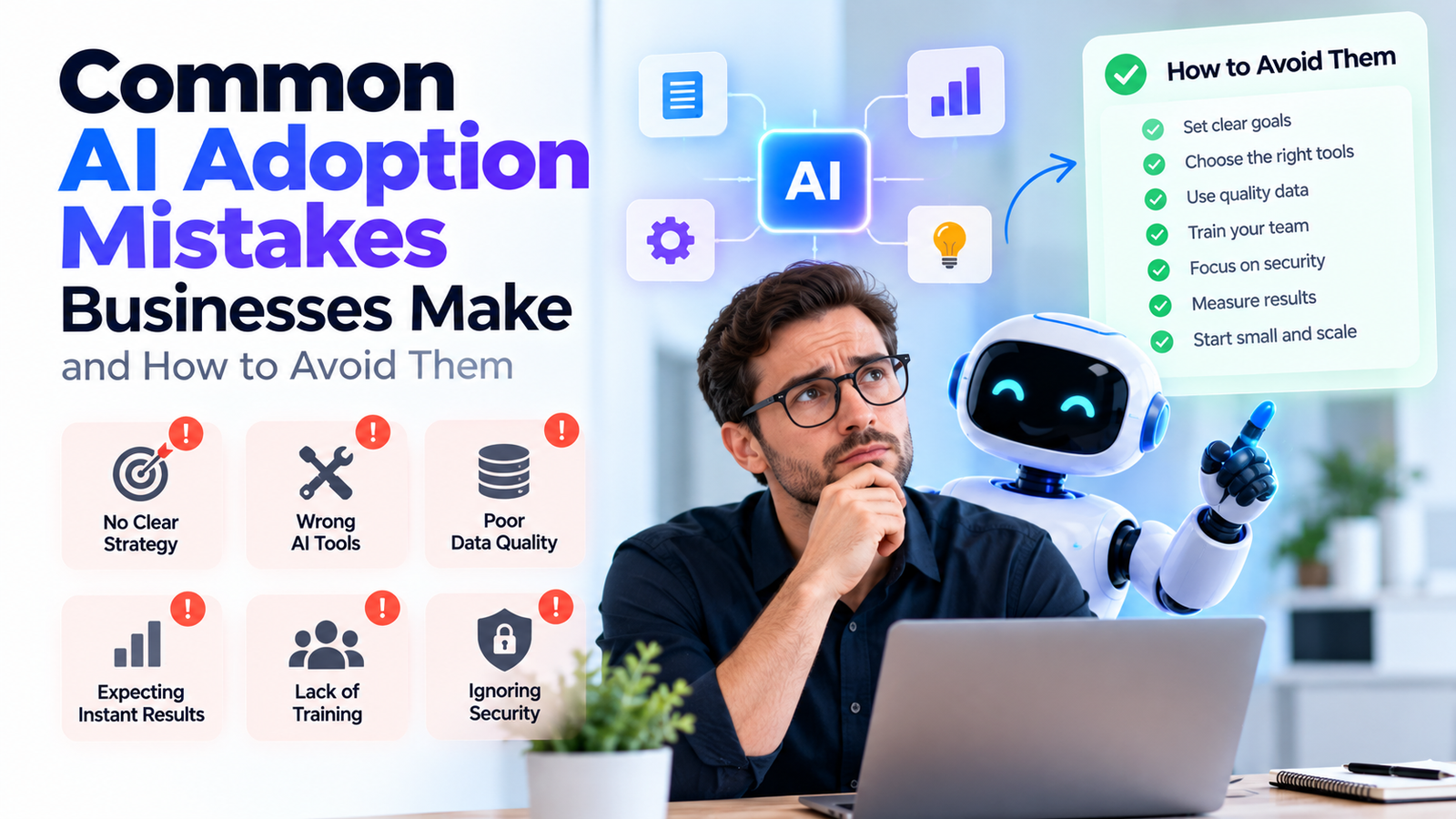
1. Adopting AI Without a Clear Strategy
One of the most common mistakes is implementing AI simply because it is trending. Without defined business goals, companies may invest in tools that do not solve real problems.
How to avoid it: Identify specific challenges AI can address, such as reducing customer support response times, automating data entry, or improving lead qualification. Define measurable goals before selecting a solution.
2. Choosing the Wrong AI Tools
Not every AI platform is suitable for every business. Selecting tools based only on popularity or features can lead to unnecessary costs and integration difficulties.
How to avoid it: Evaluate tools based on your business needs, budget, technical requirements, scalability, and compatibility with existing systems. Test solutions through small pilot projects before committing to larger investments.
3. Ignoring Data Quality
AI systems depend on reliable information. Incomplete, outdated, inconsistent, or poorly organized data can produce inaccurate outputs and unreliable decisions.
How to avoid it: Clean and organize your data, establish clear ownership, and review data quality regularly. Ensure AI systems use relevant, authorized information.
4. Expecting Immediate Results
AI adoption takes time. Businesses that expect instant productivity gains may abandon useful solutions before they have been properly tested and integrated into daily operations.
How to avoid it: Start with a manageable project, establish realistic expectations, and measure progress over time. Expand successful implementations gradually based on measurable results.
5. Overlooking Employee Training
Introducing AI tools without preparing employees can result in low adoption, inconsistent usage, and resistance to change.
How to avoid it: Provide practical training, explain how AI supports employees’ work, and encourage teams to experiment within clear guidelines. Involve employees when selecting and implementing tools.
6. Ignoring Security and Privacy
AI tools may process sensitive customer information, internal documents, or confidential business data. Poor data-handling practices can create security and compliance risks.
How to avoid it: Establish an AI usage policy, use approved tools, restrict access to sensitive information, and review data retention and privacy practices. Apply appropriate security controls and comply with relevant regulations.
7. Relying Too Much on AI-Generated Results
AI can generate incorrect information, overlook context, or produce biased results. Using its outputs without verification can damage customer trust and business decisions.
How to avoid it: Review important AI-generated content, validate critical information, and keep human oversight for high-impact decisions. Define clear escalation procedures when the system is uncertain.
8. Failing to Integrate AI With Existing Workflows
An AI tool may deliver limited value if employees must constantly switch between applications or manually transfer information. Disconnected systems can also create duplicate work.
How to avoid it: Identify where AI fits into existing processes and use integrations or workflow automation tools such as n8n, Zapier, and Make to connect applications where appropriate.
9. Not Measuring AI Performance
Without clear performance indicators, businesses cannot determine whether AI investments are delivering value.
How to avoid it: Establish baseline measurements and track relevant metrics, including time saved, error rates, operating costs, customer satisfaction, and task completion rates. Review the results regularly and adjust the implementation.
10. Automating Everything at Once
Trying to implement AI across every department simultaneously can overwhelm teams, increase costs, and make problems harder to identify.
How to avoid it: Begin with one repetitive, well-defined task. Test the solution, gather feedback, address weaknesses, and scale to other workflows when the initial implementation proves effective.
Best Practices for Successful AI Adoption
Businesses can improve their chances of success by following these principles:
- Set clear objectives aligned with business priorities.
- Choose tools that address specific operational challenges.
- Prepare reliable data and establish security policies.
- Train employees and encourage responsible AI use.
- Keep human oversight where accuracy and accountability matter.
- Measure results and continuously improve workflows.
Conclusion
AI adoption offers businesses opportunities to improve productivity, streamline operations, and deliver better customer experiences. However, success depends on more than choosing the right technology.
By avoiding common mistakes such as unclear objectives, poor data quality, inadequate training, and weak performance measurement, businesses can build a more effective AI strategy.
Ready to adopt AI in your business? Profilent can help you explore AI solutions and workflow automation tailored to your business goals, helping you improve efficiency and make informed technology decisions.