
For years, businesses relied on traditional content management systems to build websites. They were simple, familiar, and easy to manage. But as digital experiences evolved, older systems started struggling to keep up with modern performance, scalability, and multi-platform content demands.
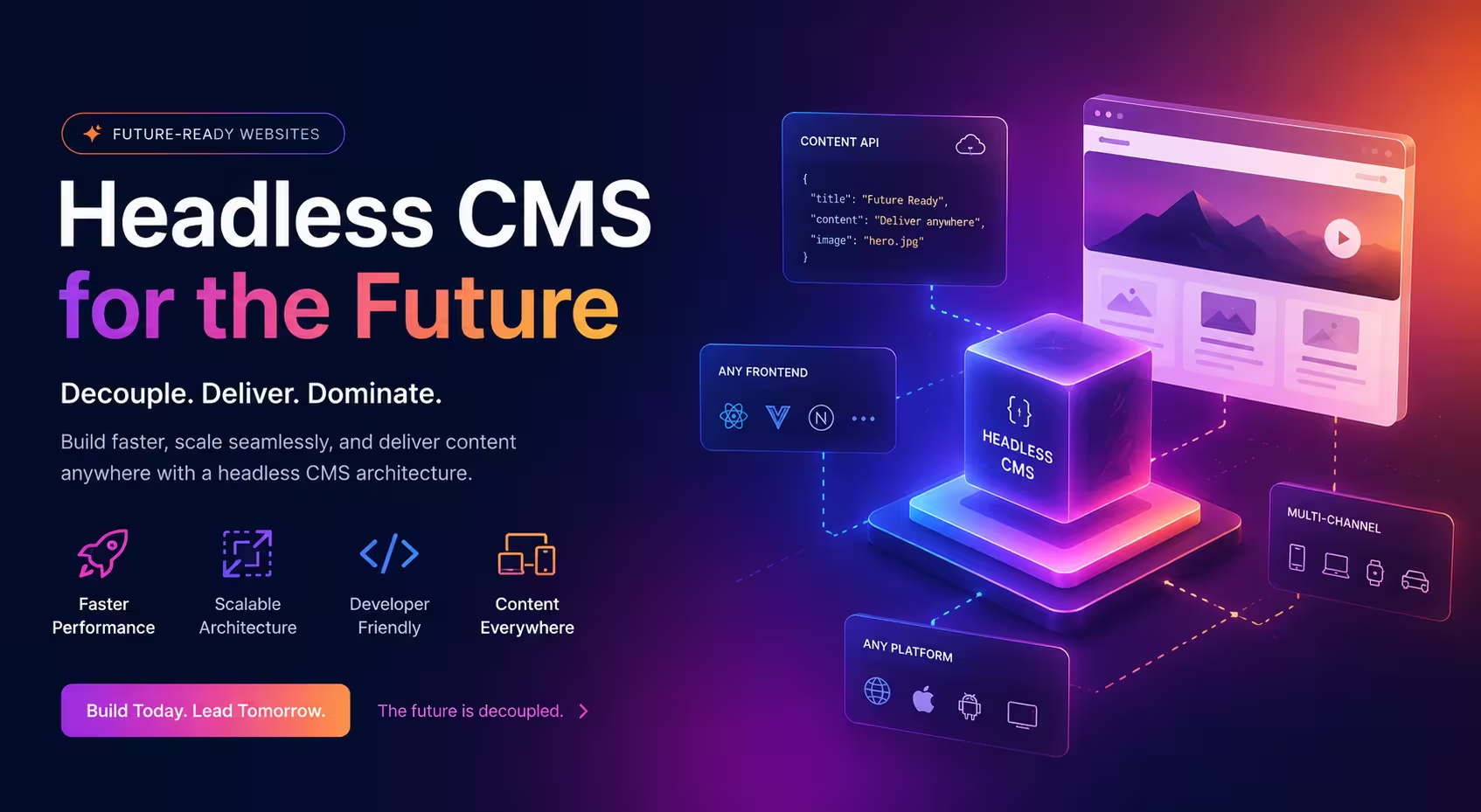
That’s where Headless CMS technology stepped in.
In 2026, headless CMS platforms are powering everything from enterprise websites and mobile apps to smart devices and ecommerce platforms. Developers love the flexibility. Businesses love the speed. And marketers love the control.
So why is everyone suddenly moving toward headless architecture?
What Exactly is a Headless CMS?
A traditional CMS combines the backend (where content is managed) and the frontend (how content is displayed). A headless CMS separates these two layers.
In simple terms:
- Content lives in one place
- APIs deliver it anywhere
- Developers build the frontend independently
This means the same content can appear on websites, mobile apps, smart TVs, digital kiosks, and even wearable devices — all from one centralized platform.
Speed Matters More Than Ever
Website visitors in 2026 expect instant loading times. Even a few seconds of delay can increase bounce rates and reduce conversions.
Headless CMS platforms are often paired with modern frameworks like React, Next.js, and Jamstack architecture, resulting in:
- Faster page loading
- Better mobile performance
- Improved Core Web Vitals
- Enhanced SEO rankings
Search engines now prioritize user experience heavily, making performance optimization a critical ranking factor.
Top Headless CMS Platforms Businesses Are Using
Contentful
Popular among enterprises for scalable content delivery and API integrations.
Sanity
Known for real-time collaboration and flexible content structures.
Strapi
A favorite among developers for customization and self-hosting capabilities.
Ghost
Widely used for content-focused websites and modern publishing experiences.
Hygraph
Growing rapidly for enterprise-level content orchestration.
Why Developers Prefer Headless Architecture
Traditional CMS systems often limit customization and performance. Headless architecture gives developers complete freedom to use modern technologies without backend restrictions.
Benefits include:
- Greater design flexibility
- Easier API integrations
- Improved security
- Better scalability
- Omnichannel publishing capabilities
For startups and growing businesses, this flexibility can significantly reduce future redevelopment costs.
The SEO Advantage
One major misconception is that headless websites are difficult for SEO. In reality, modern headless frameworks are highly optimized for search engines.
Businesses using headless architecture often see improvements in:
- Site speed
- Mobile usability
- Structured data implementation
- Technical SEO performance
- User engagement metrics
Combined with AI-driven personalization, headless websites are creating more dynamic and search-friendly experiences.
Is Headless CMS Right for Every Business?
Not always.
Small websites with basic functionality may still work perfectly with traditional CMS platforms. However, businesses planning for scalability, omnichannel content delivery, or high-performance web experiences are increasingly adopting headless solutions.
The trend is clear: websites are no longer isolated digital assets — they are part of larger connected ecosystems.
Final Thoughts
Headless CMS is redefining how modern websites are built in 2026. As businesses demand faster, smarter, and more flexible digital experiences, traditional website structures are rapidly evolving.
Whether you’re building a startup platform, ecommerce store, or enterprise application, headless technology offers the flexibility needed for the next generation of the web.
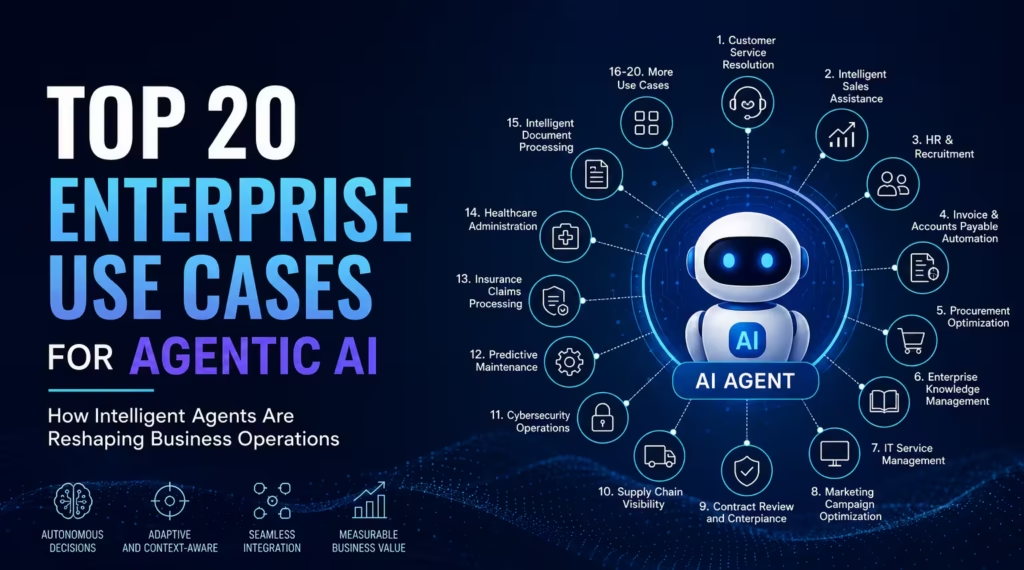
Top 20 Enterprise Use Cases for Agentic AI
While the first wave of AI focused on generating content, answering questions, and assisting employees, the next wave is about taking action. This evolution is known as Agentic AI—intelligent systems capable of planning, reasoning, making decisions, and executing complex business workflows with minimal human intervention. Unlike traditional automation, which follows predefined rules, Agentic AI adapts […]
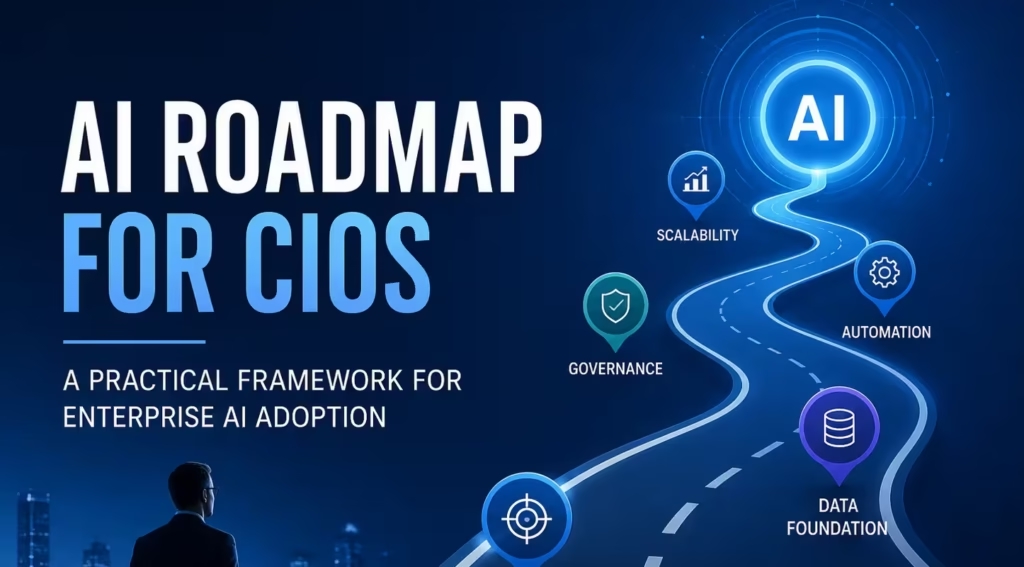
AI Roadmap for CIOs | Enterprise AI Strategy & Adoption Guide
Organizations across industries are investing in AI to improve productivity, automate processes, enhance customer experiences, and make data-driven decisions. However, while enthusiasm for AI is high, many initiatives fail to move beyond pilot projects because organizations lack a structured implementation strategy. For Chief Information Officers (CIOs), the challenge is no longer deciding whether to adopt […]
AI Workforce Management for Enterprise Leaders
For decades, workforce management has focused on people—hiring, training, scheduling, performance management, and employee engagement. As Artificial Intelligence becomes embedded into everyday business operations, a new challenge is emerging: organizations must now manage not only human employees but also intelligent AI agents, automation workflows, and digital assistants. This shift marks the beginning of AI Workforce […]