
No-code development is no longer just a startup trend — it has become a major force driving digital transformation across industries in 2026. Businesses, entrepreneurs, and even non-technical professionals are now building websites, apps, workflows, and automation systems without writing a single line of code.
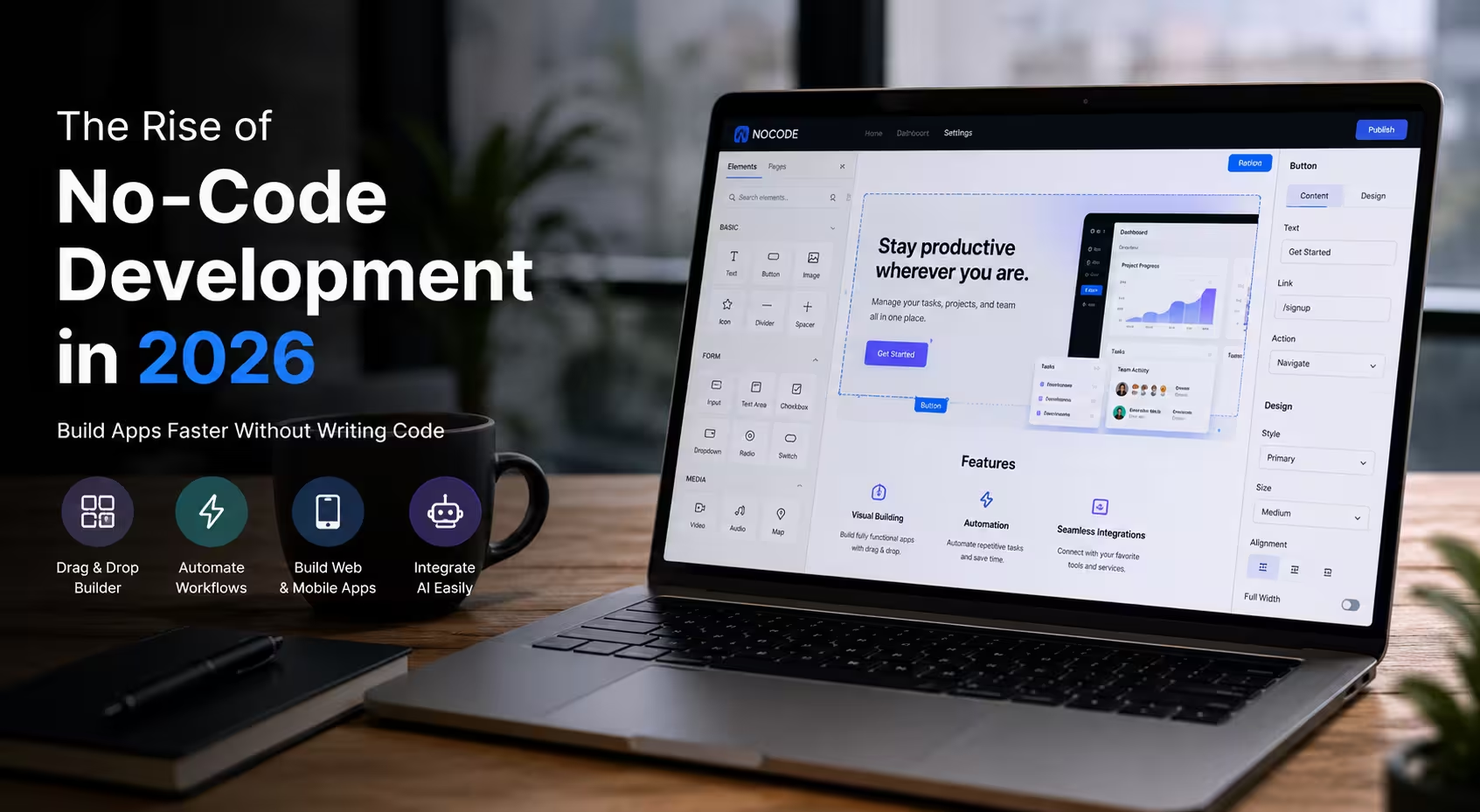
With the increasing demand for faster product launches and reduced development costs, no-code platforms are changing how software is built. According to recent industry reports, over 70% of new business applications are expected to use low-code or no-code technologies by 2026. This shift is helping companies save time, reduce dependency on developers, and innovate faster.
What is No-Code Development?
No-code development allows users to create applications using visual drag-and-drop interfaces instead of traditional programming languages. These platforms provide pre-built components, templates, and automation features that make software development accessible to everyone.
From eCommerce stores and mobile apps to CRM systems and workflow automation, no-code platforms can handle a wide variety of business needs.
Why Businesses Are Adopting No-Code Platforms
The biggest advantage of no-code technology is speed. Traditional software development can take months, while no-code applications can often be launched within days.
Key benefits include:
- Faster development cycles
- Lower development costs
- Easy workflow automation
- Reduced dependency on technical teams
- Quick testing and deployment
- Improved scalability for startups and SMEs
Companies are also integrating AI-powered no-code tools to automate customer support, marketing, and internal operations.
Top No-Code Tools in 2026
Several no-code platforms are dominating the market this year:
1. Webflow
Popular for designing responsive websites with advanced CMS capabilities and SEO optimization.
2. Bubble
Widely used for building SaaS products and complex web applications without coding.
3. Zapier
Helps businesses automate repetitive tasks by connecting apps and services.
4. Glide
Allows users to create mobile apps directly from spreadsheets and databases.
5. Airtable
Combines database functionality with automation and project management tools.
AI and No-Code: The Future of Development
Artificial Intelligence is rapidly enhancing no-code ecosystems. AI-powered features can now generate workflows, create UI layouts, and automate customer interactions. Businesses are increasingly using AI no-code platforms to streamline operations and improve user experiences.
The combination of AI and no-code development is making software creation more accessible than ever before.
SEO Benefits of No-Code Websites
Modern no-code website builders are also optimized for search engines. Platforms now include:
- Built-in SEO settings
- Fast-loading templates
- Mobile responsiveness
- Schema integration
- Easy metadata customization
This helps businesses improve rankings and drive organic traffic without extensive technical expertise.
Final Thoughts
No-code development is reshaping the future of technology in 2026. Whether you’re a startup founder, freelancer, or enterprise business, no-code tools provide an efficient and cost-effective way to build digital products quickly.
As AI continues to evolve, the no-code movement will only become more powerful, enabling anyone to turn ideas into real applications faster than ever before.
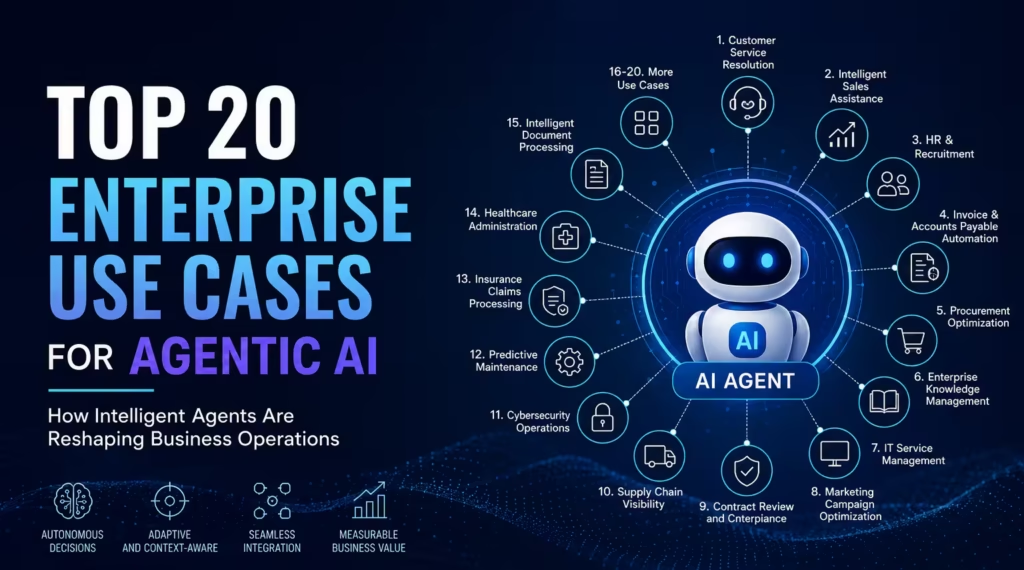
Top 20 Enterprise Use Cases for Agentic AI
While the first wave of AI focused on generating content, answering questions, and assisting employees, the next wave is about taking action. This evolution is known as Agentic AI—intelligent systems capable of planning, reasoning, making decisions, and executing complex business workflows with minimal human intervention. Unlike traditional automation, which follows predefined rules, Agentic AI adapts […]
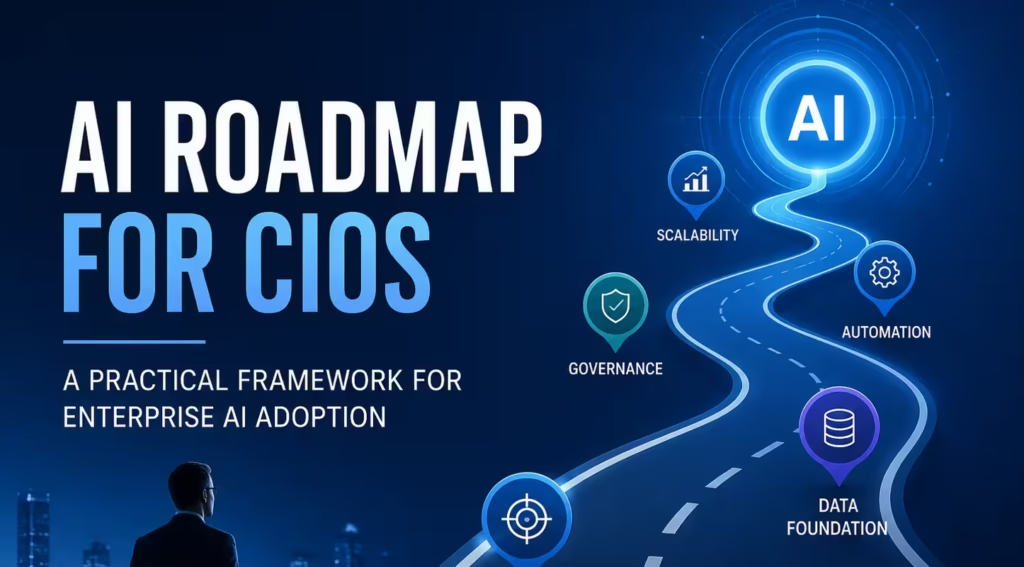
AI Roadmap for CIOs | Enterprise AI Strategy & Adoption Guide
Organizations across industries are investing in AI to improve productivity, automate processes, enhance customer experiences, and make data-driven decisions. However, while enthusiasm for AI is high, many initiatives fail to move beyond pilot projects because organizations lack a structured implementation strategy. For Chief Information Officers (CIOs), the challenge is no longer deciding whether to adopt […]
AI Workforce Management for Enterprise Leaders
For decades, workforce management has focused on people—hiring, training, scheduling, performance management, and employee engagement. As Artificial Intelligence becomes embedded into everyday business operations, a new challenge is emerging: organizations must now manage not only human employees but also intelligent AI agents, automation workflows, and digital assistants. This shift marks the beginning of AI Workforce […]