
Artificial Intelligence is no longer limited to large tech companies. In 2026, AI automation has become one of the most valuable technologies for small businesses looking to improve productivity, reduce operational costs, and scale faster.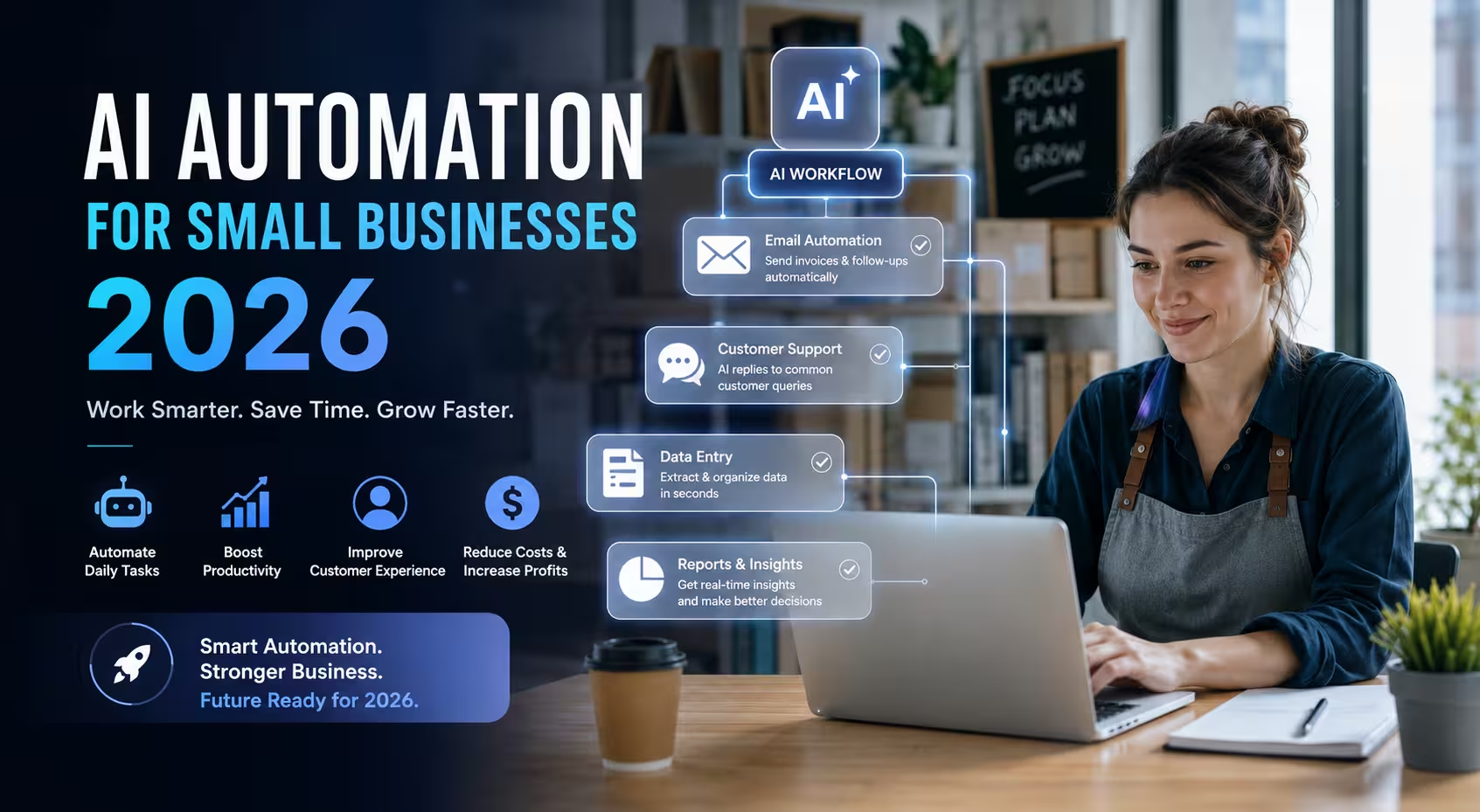
From automated customer support to AI-powered marketing campaigns, businesses are using smart tools to handle repetitive tasks while focusing more on growth and customer engagement.
Why AI Automation is Growing Rapidly
Small businesses often operate with limited budgets and smaller teams. AI automation helps bridge that gap by automating daily operations that traditionally require manual effort.
Recent market studies show that businesses implementing AI automation can reduce operational workload by up to 40% while significantly improving customer response times and efficiency.
Key areas where AI automation is making an impact include:
- Customer support
- Email marketing
- Social media management
- Sales automation
- Data analysis
- Appointment scheduling
- Content generation
Benefits of AI Automation for Businesses
1. Increased Productivity
AI tools can manage repetitive administrative tasks automatically. This allows teams to spend more time on strategic business activities instead of manual processes.
2. Cost Reduction
Hiring large support or operational teams can be expensive. AI automation software reduces the need for excessive manual work while maintaining efficiency.
3. Better Customer Experience
AI chatbots and virtual assistants can provide instant responses 24/7, improving customer satisfaction and engagement.
4. Smarter Decision Making
AI analytics platforms can process large amounts of business data quickly, helping owners make informed decisions based on real-time insights.
Best AI Automation Tools in 2026
1. OpenAI
Used for AI chatbots, content generation, and intelligent customer interactions.
2. HubSpot
Provides AI-powered CRM, email marketing, and sales automation tools.
3. Notion
Offers AI-assisted documentation, project management, and workflow organization.
4. Shopify
Uses AI for personalized shopping experiences, inventory management, and customer recommendations.
5. Canva
Introduced AI-powered design generation and automated content creation tools.
AI Automation Trends in 2026
The latest trend is the integration of generative AI into everyday business tools. Companies are now using AI to:
- Generate blog content
- Create social media posts
- Build marketing campaigns
- Analyze customer behavior
- Automate lead generation
- Produce product descriptions
Voice AI assistants and AI-powered video generation tools are also becoming popular among growing businesses.
Challenges Businesses Should Consider
Although AI automation offers many advantages, businesses should still focus on:
- Data privacy and security
- Human oversight for critical tasks
- Proper AI training and setup
- Ethical AI usage
Successful automation works best when AI supports human teams rather than completely replacing them.
Final Thoughts
AI automation is transforming how small businesses operate in 2026. By adopting the right AI tools, businesses can improve efficiency, deliver better customer experiences, and compete more effectively in a digital-first market.
As AI technology continues to evolve, businesses that embrace automation early will gain a strong competitive advantage in the years ahead.
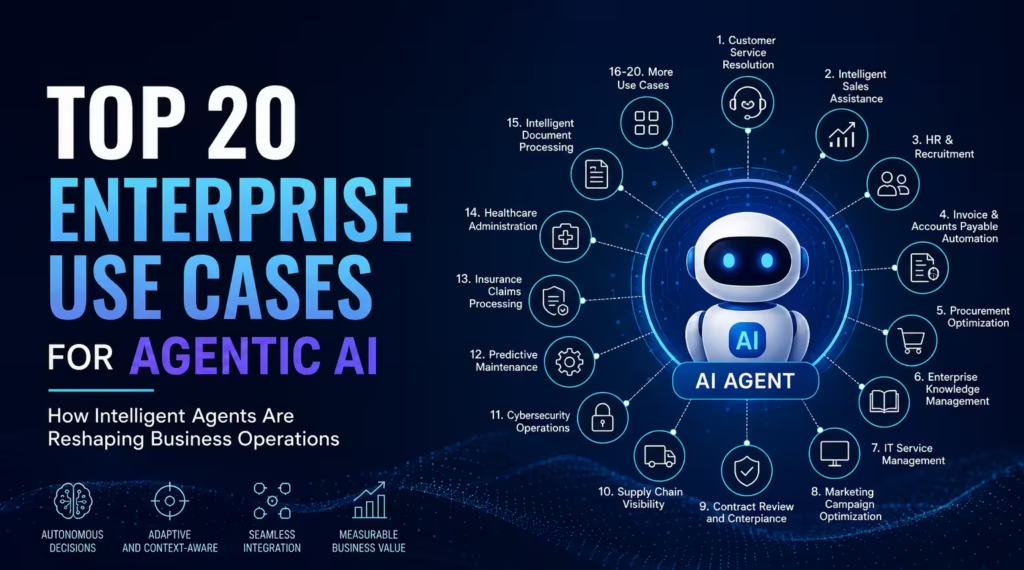
Top 20 Enterprise Use Cases for Agentic AI
While the first wave of AI focused on generating content, answering questions, and assisting employees, the next wave is about taking action. This evolution is known as Agentic AI—intelligent systems capable of planning, reasoning, making decisions, and executing complex business workflows with minimal human intervention. Unlike traditional automation, which follows predefined rules, Agentic AI adapts […]
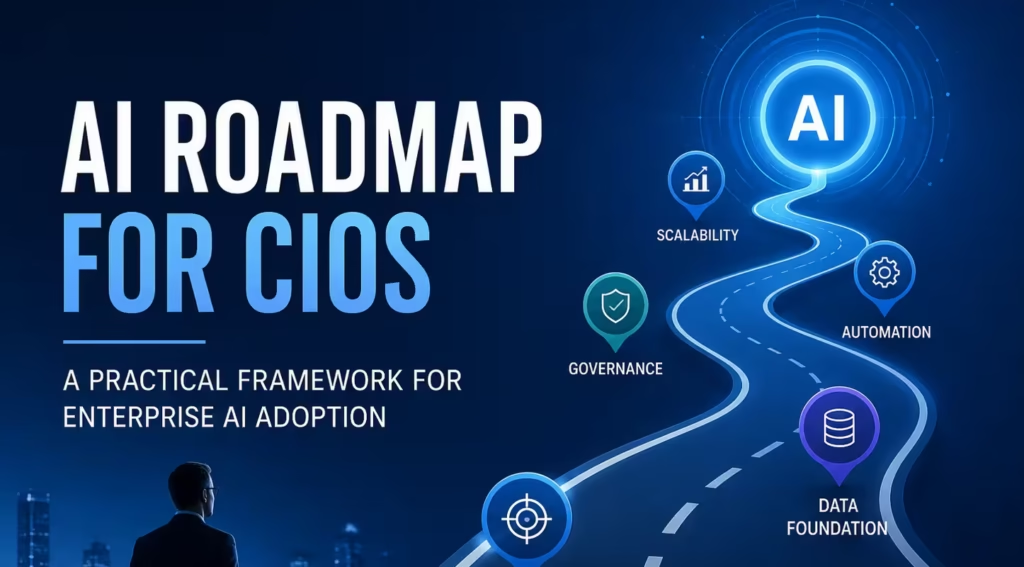
AI Roadmap for CIOs | Enterprise AI Strategy & Adoption Guide
Organizations across industries are investing in AI to improve productivity, automate processes, enhance customer experiences, and make data-driven decisions. However, while enthusiasm for AI is high, many initiatives fail to move beyond pilot projects because organizations lack a structured implementation strategy. For Chief Information Officers (CIOs), the challenge is no longer deciding whether to adopt […]
AI Workforce Management for Enterprise Leaders
For decades, workforce management has focused on people—hiring, training, scheduling, performance management, and employee engagement. As Artificial Intelligence becomes embedded into everyday business operations, a new challenge is emerging: organizations must now manage not only human employees but also intelligent AI agents, automation workflows, and digital assistants. This shift marks the beginning of AI Workforce […]